High-Risk Work | 1 Day
Rigging and Lifting
Course Overview
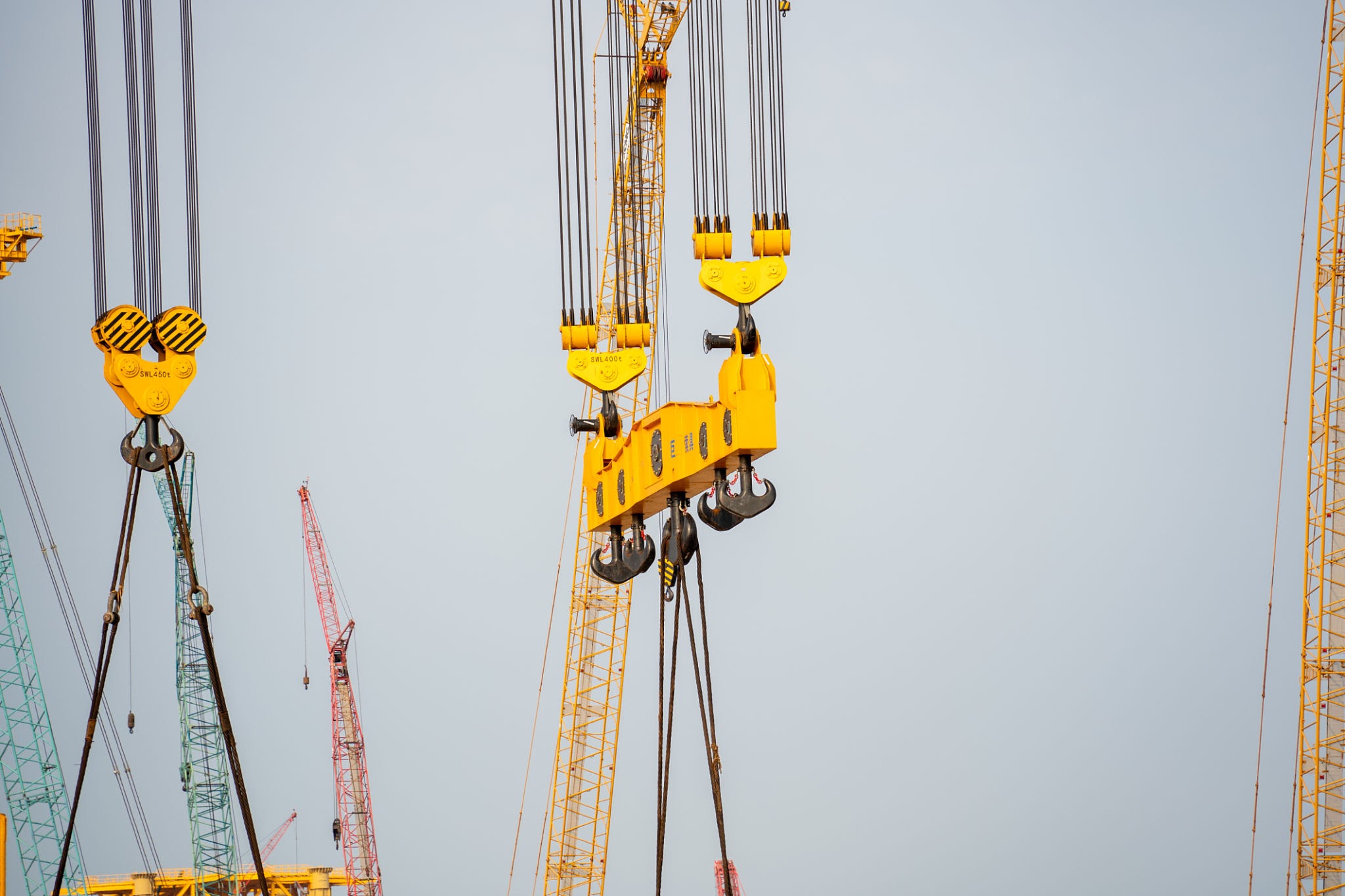
Improper rigging is a primary cause of catastrophic load drops. This course develops the vital knowledge and practical skills required for safe rigging and lifting operations. It covers the selection and inspection of lifting accessories, standard hand signals, safe load movement dynamics, and Safe Working Load (SWL) considerations.
Target Audience and Requirements
Personnel involved in rigging and lifting operations, including riggers, crane/forklift operators, supervisors, HSE advisors, and safety representatives.
Benefits and Standards Alignment
Based on OSHA 29 CFR 1926.251 (Rigging Equipment) and Saudi Aramco GI 7.028 / GI 7.029. Dramatically improves safe lifting practices, develops a deep understanding of lifting accessories (slings, shackles) and rejection criteria, and improves communication through standard crane hand signals.
Course Outline
- Types of slings, shackles, and calculating Safe Working Loads (SWL).
- How sling angles affect tension and load capacity.
- Pre-use visual inspection; identifying crushed cables and stretched hooks.
- Standard crane hand signals, using tag lines, and maintaining clearance zones.
Lesson Plan
| Time | Session Focus | Activities and Topics |
|---|---|---|
| 08:00 - 09:30 | Rigging Hardware & SWL | Types of slings, shackles, and hooks; calculating Safe Working Loads (SWL). |
| 09:30 - 10:30 | Sling Angles & Tension | How sling angles affect tension and load capacity; locating the center of gravity. |
| 10:30 - 10:45 | Break | |
| 10:45 - 12:00 | Inspection & Rejection | Pre-use visual inspection; identifying crushed cables, stretched hooks, and synthetic sling tears. |
| 12:00 - 13:00 | Lunch | |
| 13:00 - 15:00 | Load Movement & Signals | Standard crane hand signals, using tag lines, and maintaining clearance zones. |
| 15:00 - 16:00 | Practical Assessment | Hands-on inspection of damaged vs. good rigging gear, signal demonstration, and written exam. |